Making & Fabrication
The 3D Printing Expo Turning Workshops Into Furniture Factories
3D printing has spent years being shown as a tiny plastic trinket on a tiny machine.
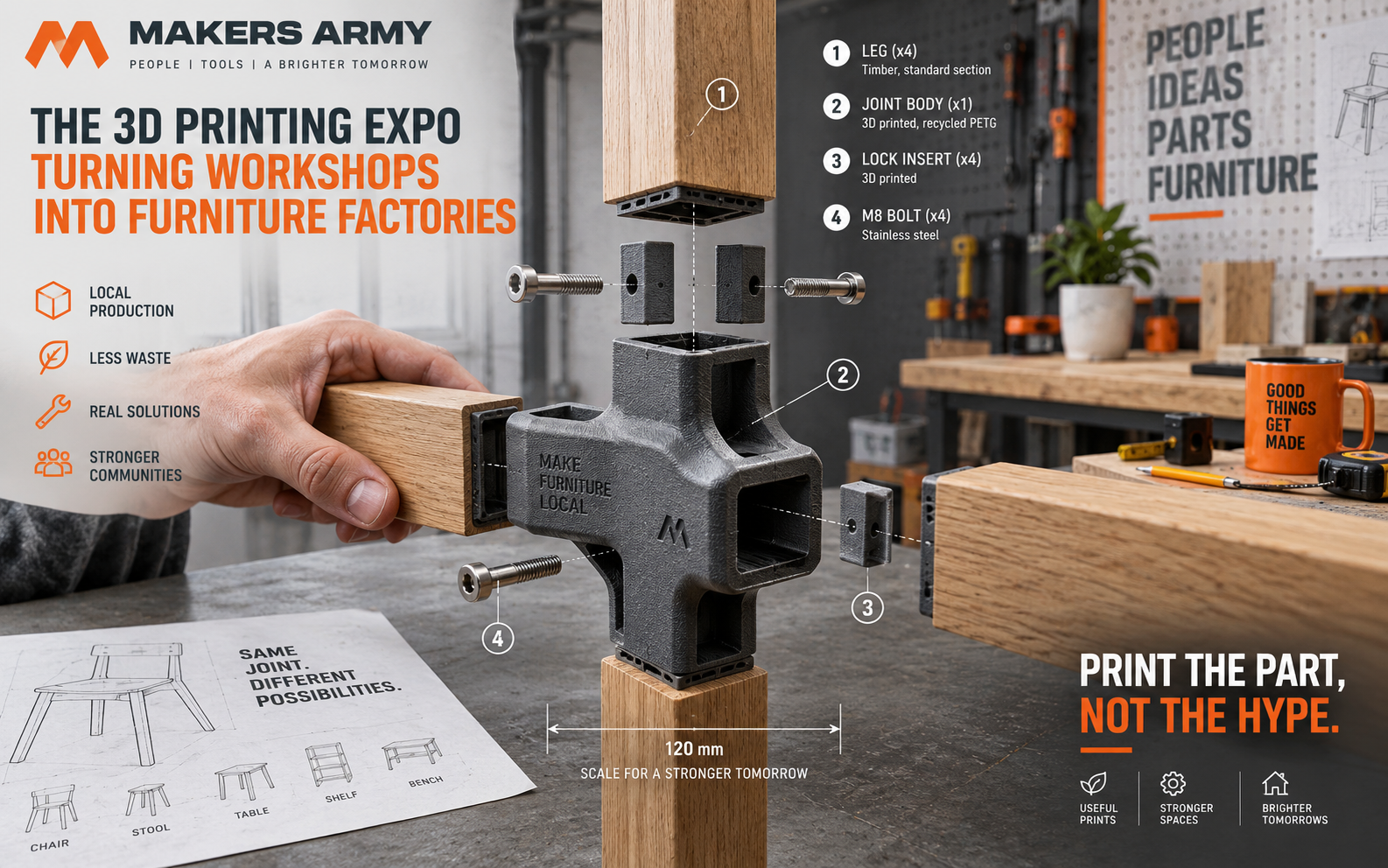
3D printing has spent years being shown as a tiny plastic trinket on a tiny machine.
The scale is changing. TCT Shenzhen 2026 is putting advanced additive manufacturing, product design and industrial production in the same conversation, while current design coverage is looking at printed furniture, installations and interior elements. CreativeHome's report is a good overview of the shift.
The exciting bit is not the printer
It is the new shape of the workshop. A designer can make a full-size part, test it, change the digital model and produce the next version without ordering a new mould every time.
That does not mean every maker needs an industrial printer. It means the gap between “I have an idea” and “there is a physical prototype” is getting smaller.
Start with a part, not a whole chair
The sensible entry point is a bracket, handle, joint, template, display piece or replacement part. Choose something where changing the shape saves time or solves a real problem.
Do not print a large object just to prove you can. Print the part that lets you test the idea.
Try this: find one awkward component in your current workflow and ask whether a custom printed version would remove a repeated annoyance.
Useful resource
Open the source: TCT Shenzhen ↗
Start with the primary source, then follow the practical takeaway in this story.
Open resource