
Motion & 3D
D*CKHEAD Is the AI Short Film That Actually Feels Directed
Timothy Solinger’s four-minute crime farce is funny, strange and properly directed—and it has a useful lesson for anyone trying to make AI video feel like a film instead of a demo.
Most AI short films still feel like a folder full of impressive shots that somebody has forced into the same timeline.
This one feels like a film.
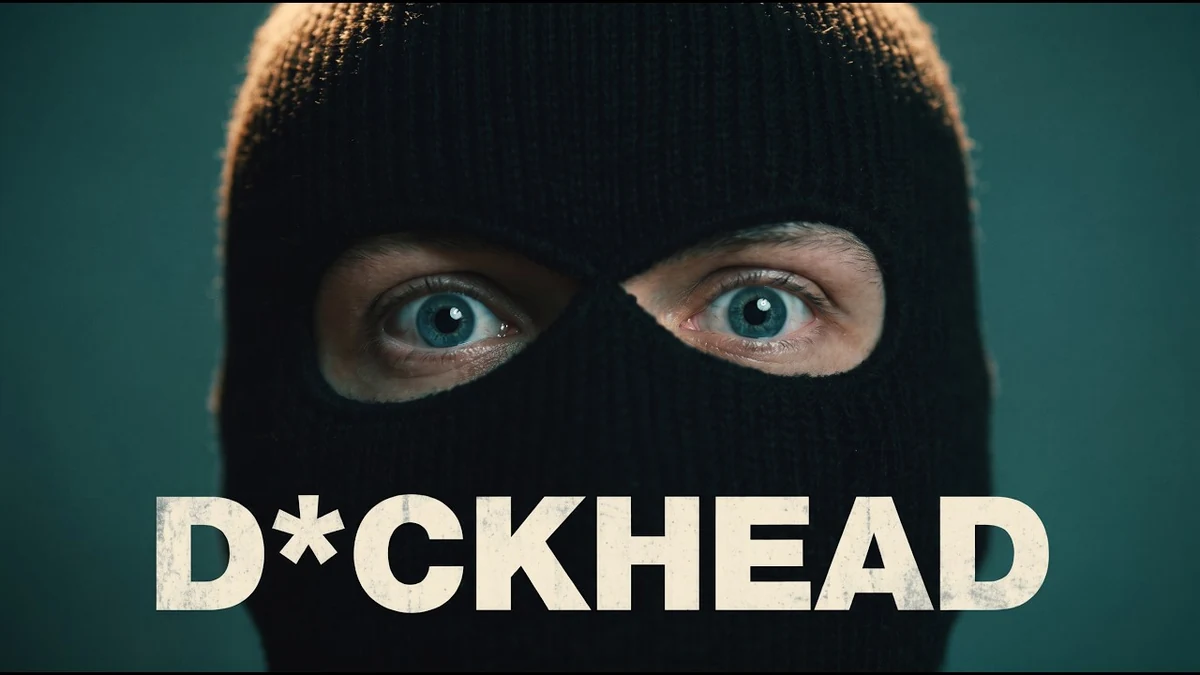
D*CKHEAD, directed by Timothy Solinger, follows a hopeless bank robber who ducks into a tattoo parlour after a job goes sideways. It is strange, funny, properly paced and only 4 minutes 48 seconds long—which is about the perfect amount of time to prove an idea without turning it into homework.
Watch it here first. It is absolutely worth the five minutes.
The joke is doing more work than the software
The film was made with Higgsfield for its 2026 Global Film Festival, but the interesting bit is not that it was made with AI. The interesting bit is that Solinger has given the technology a very simple job: help tell one ridiculous story.
There is a recognisable main character. He wants something. He makes bad decisions. Each scene makes the problem worse. That sounds obvious, but it is exactly what disappears when people become more interested in generating a glossy tracking shot than making us care what happens next.
The robber's balaclava also does a sneaky amount of practical work. It gives the character a strong silhouette, hides the hardest part of visual continuity and lets those enormous eyes carry the comedy. That is not cheating. That is design.
Consistency beats spectacle
The film is not trying to show us a new universe every twelve seconds. It keeps returning to the same character, the same deadpan tone and the same small-town mess. That repetition is what makes it coherent.
There are still little AI oddities if you go hunting for them. Fine. I would rather watch a funny film with a few wonky details than a technically perfect demo with absolutely nothing to say.
The festival itself was not a casual weekend challenge. Higgsfield put up a US$1 million prize pool and required entries to run for at least three minutes, with the visual generation completed on its platform. That pushes entrants past the easy bit—making one great shot—and into the genuinely difficult job of making dozens of shots belong together.
This is where D*CKHEAD earns its keep. The shots do not just look good individually. They set up information, land jokes and move the disaster forward.
Here is the useful bit for makers
If you want to make your own AI short, do not begin with “I want to make a cinematic film.” That is not an idea. Begin with a character who has a problem we can understand in five seconds.
Then give yourself some constraints:
- one main character with an unmistakable silhouette;
- one clear objective;
- two or three locations, not twenty;
- one prop or costume detail that survives every shot;
- a visual rule for colour, camera movement and framing;
- sound and editing that glue the imperfect images together.
Before attempting five minutes, make a six-shot test that lasts no more than 60 seconds. If a stranger can follow it with the sound off, the visual story is probably doing its job. If they cannot, another expensive-looking close-up is not going to save it.
That is the best lesson in this film. AI can generate the pieces, but direction is deciding which pieces belong, what the audience should notice and exactly when the joke lands.
D*CKHEAD is not interesting because it proves AI can make images. We settled that argument ages ago. It is interesting because it shows what happens when somebody stops showing off the tool and starts directing the result.
And yes, the idiot in the balaclava helps enormously.