
Architecture & Interiors
One Painting Became an Actual Building
Most paintings stay on walls. Gerhard Richter's visual language has escaped one.
Most paintings stay on walls. Gerhard Richter's visual language has escaped one.
The Doha Pavilion uses the patterns from Richter's Strip paintings and translates them into the walls and interior of a permanent hexagonal gallery. Designboom's report describes how a digital experiment became a building people can walk through.
A pattern becomes a place
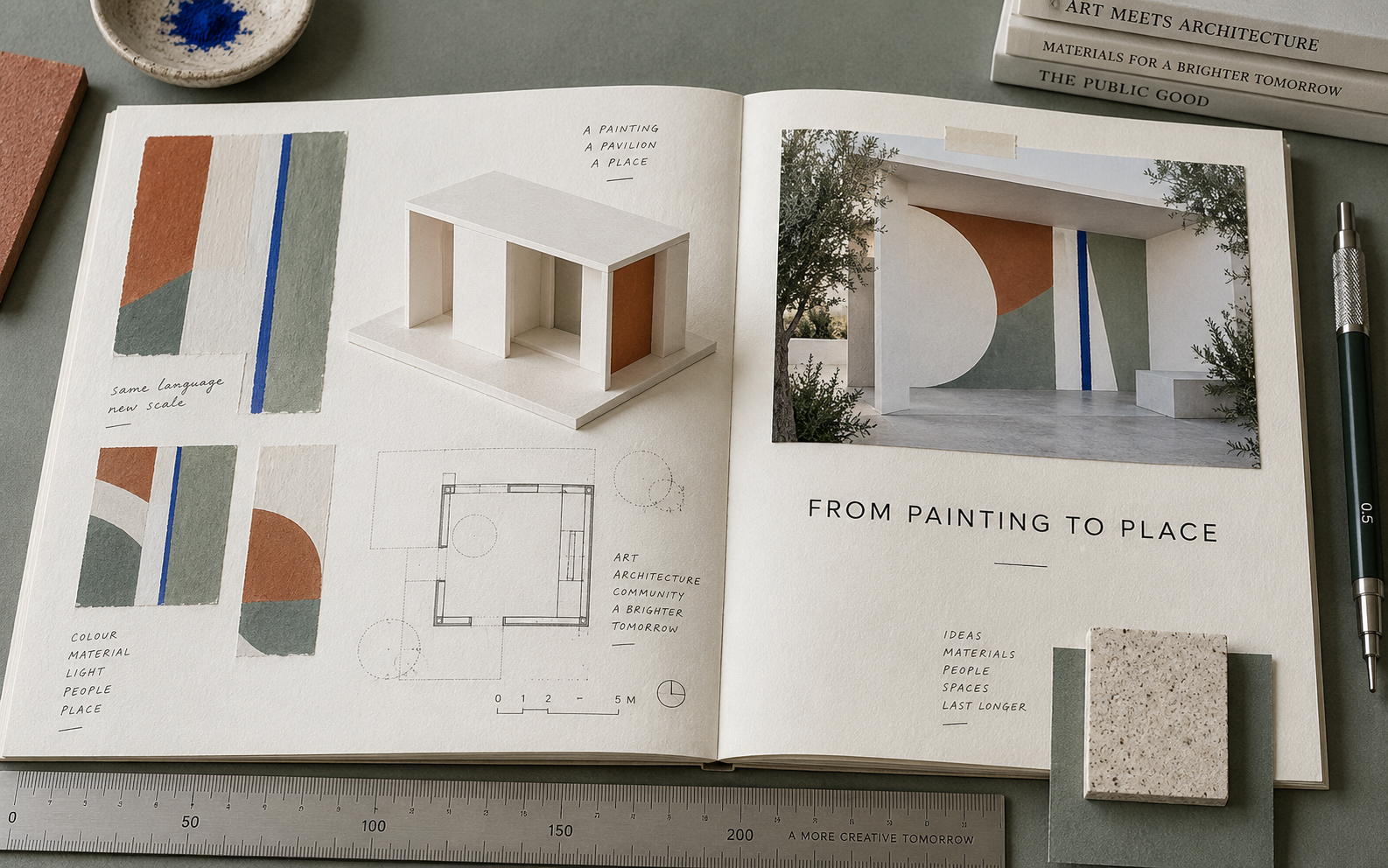
This is more than putting a famous artwork on a wall. The pattern changes the space around you. A repeated image becomes structure, atmosphere and wayfinding at the same time.
That is an excellent reminder for anyone working with repeats. A motif can be a border, wallpaper, packaging, a screen background or the thing that makes a room feel like one room instead of a pile of separate surfaces.
Start with one rule
The easiest way to make a pattern feel intentional is to give it a rule. Repeat one shape. Rotate it. Mirror it. Break it only at the edge. Use a limited palette.
You can make something much stronger from one good decision than from fifty unrelated decorative bits.
Try this: take one mark from a sketch and make a repeat that could work on a wall, a box and a small engraved object.
Useful resource
Open the source: Designboom ↗
Start with the primary source, then follow the practical takeaway in this story.
Open resource