
Exhibition & Spatial Design
The Billboard That Stopped Selling Things and Started Shouting
A giant screen in a city usually wants something from you. Buy this. Visit that. Download the app. Keep moving.
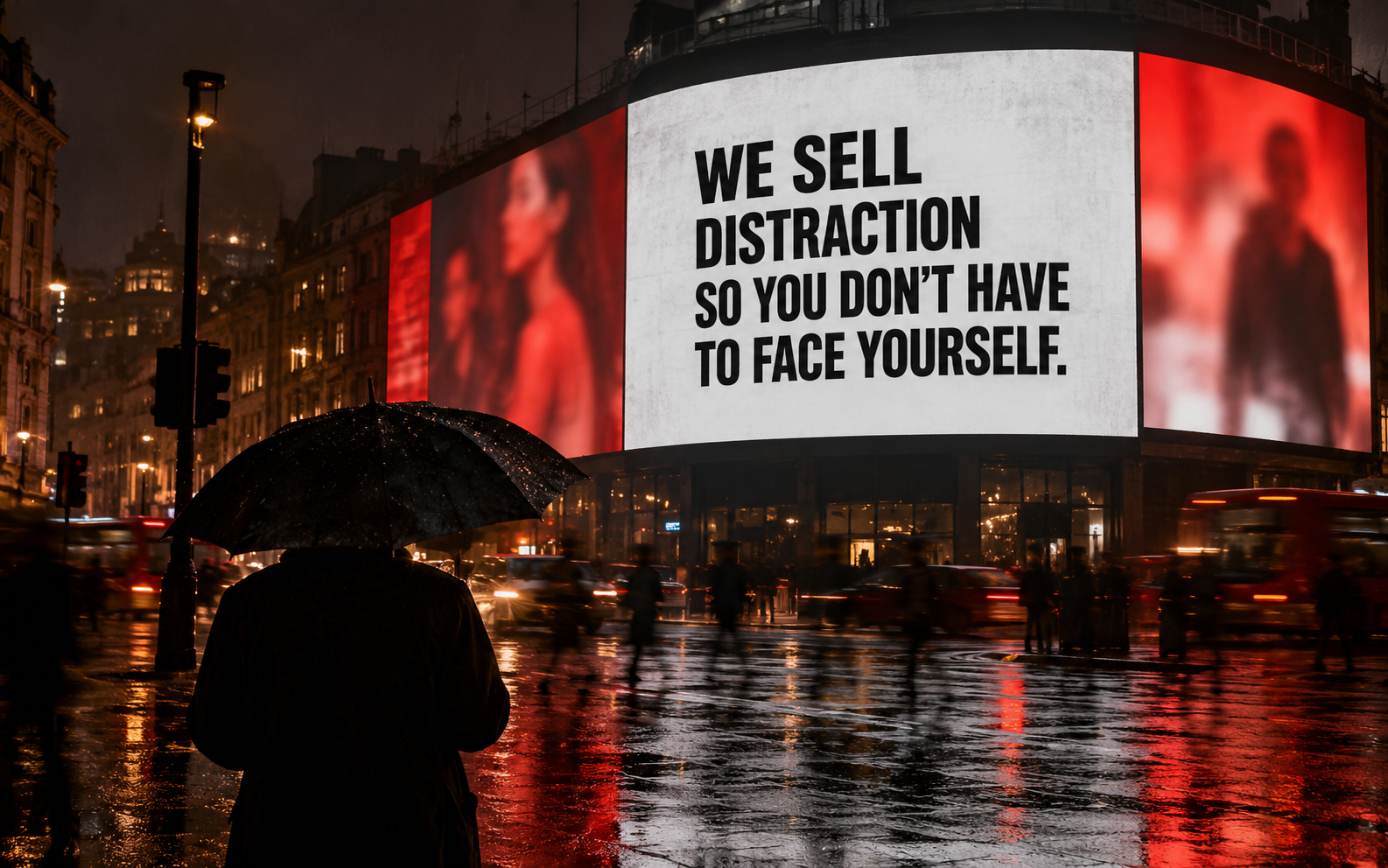
A giant screen in a city usually wants something from you. Buy this. Visit that. Download the app. Keep moving.
Jenny Holzer used the same visual machinery for something far less comfortable: short statements that interrupt the advertising around them. Her Truisms appeared on an electronic billboard in Times Square in 1982, and the work still feels relevant because it uses the language of public screens against itself. Designboom's overview explains the original gesture and its later echoes.
The design trick is restraint
The words are short. The type is clear. The screen is enormous. There is no complicated illustration trying to soften the message.
That is why it works. The visual system is familiar, but the content refuses to behave like an advert.
What a maker can learn from a public screen
When the surface is already loud, adding more decoration usually makes the message weaker. A sign, market banner or shop window might need one strong sentence and enough quiet space for it to land.
Try removing half the text before changing the font. Then remove half again. If the sign still works, you have found the real idea.
Try this: put your main message on a blank black rectangle and see if it still deserves the wall.
Useful resource
Open the source: Designboom ↗
Start with the primary source, then follow the practical takeaway in this story.
Open resource