Motion & 3D
LAIKA Printed 106,000 Faces for One Film
LAIKA used 106,000 3D-printed faces for Missing Link, joining old-school stop motion with precise digital making and modular design systems.
One puppet. A frankly stupid number of faces.
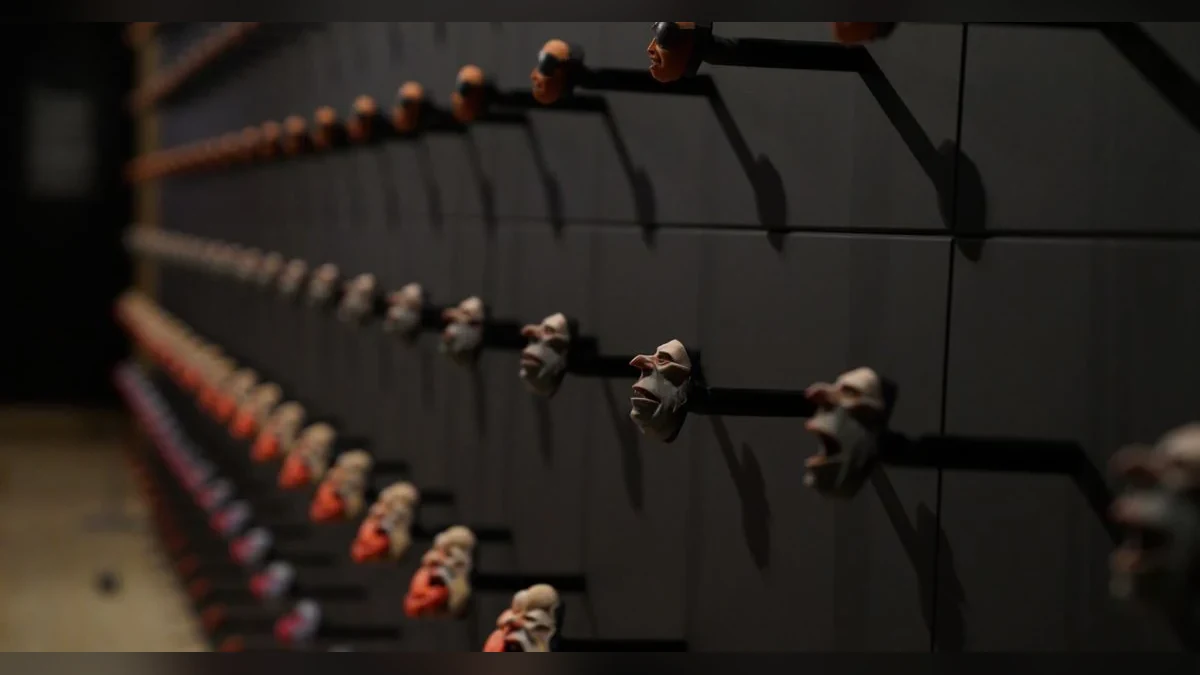
For Missing Link, stop-motion studio LAIKA produced 106,000 3D-printed faces. Guinness World Records lists it as the largest number made for a stop-motion film.
The faces are not complete heads. They are replacement pieces—different mouths, brows and expressions—that animators swap between frames. Put the right combinations together and a solid puppet appears to think, grin, panic or raise one eyebrow by less than a hair’s width.
This is the opposite of pressing “animate”. It is digital design used to create a mountain of physical parts, which are then handled one frame at a time.
See LAIKA’s wall of faces and process here. It looks like someone organised the world’s most unsettling dental drawer.
The printer did not remove the craft
LAIKA began using 3D printing for Coraline, but early faces still needed painstaking hand painting. For later films, the studio worked with Stratasys and software developers to print far more colour and surface detail directly into the parts.
The clever point is that the technology was not chosen because it was modern. Brian McLean, LAIKA’s director of rapid prototype, has repeatedly explained that the push came from performance. More printable variation meant smaller, more convincing emotional changes.
The printed part still had to be processed, fitted and used by an animator. On Kubo and the Two Strings, a single face could take about four hours to travel from printer to soundstage through a ten-step finishing process.
Build a system for variation
Most makers will never need 106,000 eyebrows. The transferable idea is modular variation. Instead of designing ten complete products, design one base with swappable fronts, names, colours, handles or expressions.
That can turn one pattern into a collection without making every version from scratch. The system does the repetition; the human still decides what matters.
Try this first: Take one character, sign or ornament and design three interchangeable features. Photograph every combination before adding more.