Print & Packaging
Fold a Letter So Cleverly It Becomes Its Own Envelope
Letterlocking turns one sheet of paper into message, envelope and tamper-evident lock—and the free tutorials are ridiculously satisfying to try at home.
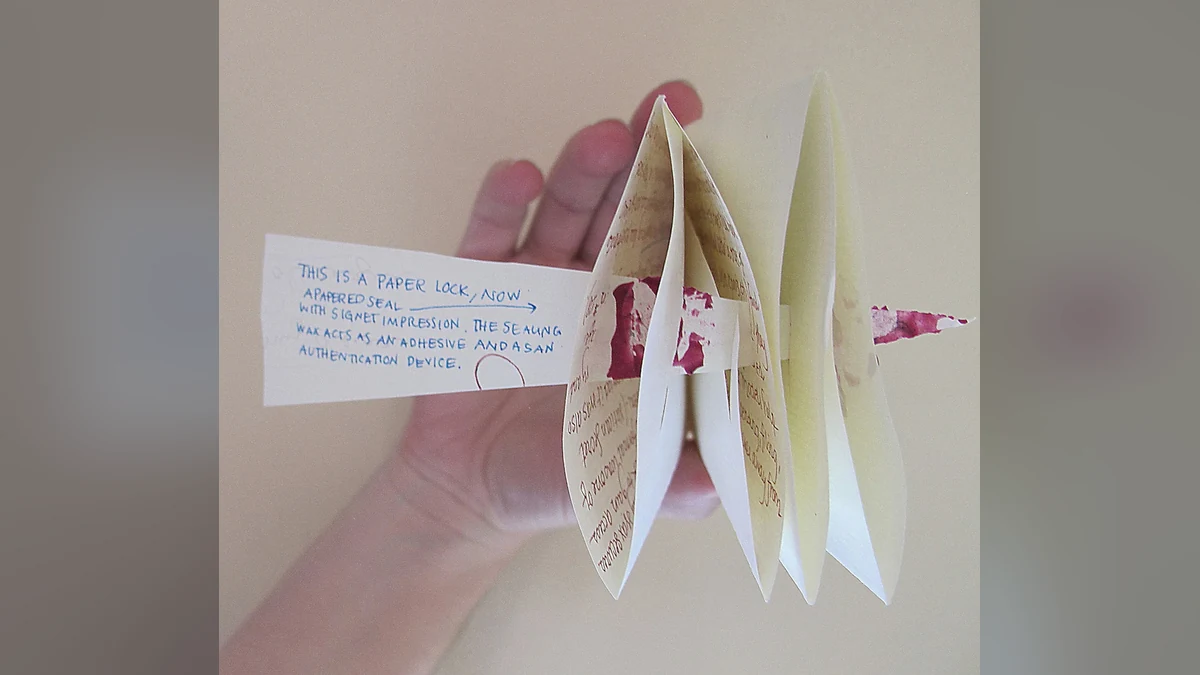
People were password-protecting paper
Before mass-produced envelopes, people folded and secured letters so the letter itself became the sending package. Some were tucked. Some were threaded. Some were sliced, woven and sealed in ways that made opening them without leaving evidence rather difficult.
The modern name is letterlocking, and it sits somewhere between packaging design, information security and the note-folding skills of a dangerously overqualified teenager.
The Unlocking History research group has documented hundreds of techniques and publishes free instructional videos. Start with its plain-English FAQ, then choose a simple model that does not need wax, knives or historical diplomatic tension.
The folds are not decoration
Letterlocking is different from putting a fancy origami shape around a message. The folds, slits, tabs, thread and seals control access to the writing. Damage and crease patterns can show how a historical letter was closed and whether it was opened.
One of the project’s most remarkable sources is the Brienne Collection: a seventeenth-century postal trunk containing about 2,600 undelivered letters, including roughly 600 that remained unopened. Researchers have even used scanning and virtual unfolding to study a sealed letter without physically opening it.
That is lovely, but Makers Army readers also get a far more immediate benefit: a single sheet can become memorable packaging.
Use it where the opening matters
Try a locked thank-you note inside a product order, a wedding invitation, a clue in a scavenger hunt, a certificate, a limited-edition print insert or a message attached to a handmade gift.
Do not sell the research group’s diagrams or instructional materials as your own. Its FAQ says most Letterlocking materials are licensed CC BY-NC 4.0 unless otherwise stated, meaning attribution is required and commercial adaptation needs separate permission. Learn the historical method, then design your own original application and artwork.
Try this first: Make one simple locked letter from ordinary printer paper. Mark every fold on a spare sheet before using expensive stock.