
Videography
Levi’s Built Three Tiny Cabins and 400 Trees for a One-Minute Monster Film
A behind-the-scenes look at the handmade world of Let’s Get Fuzzy, and a twelve-frame fabric test small videographers can try themselves.

The set in Levi's new holiday film looks like a snowy cabin in the middle of nowhere. Pull the camera back in the official making-of and it becomes a tabletop landscape with lighting rigs, model trees and a lot of patient people just outside the frame. That second view tells you why the finished film has texture instead of looking like another quick seasonal template.
Let's Get Fuzzy launched on 2 November 2026. Its monster arrives as a threat, then discovers knitwear and becomes rather easier to get along with. The story is simple enough to follow without an explanation. The production was anything but simple: the team made three cabins at different scales and 400 miniature trees. The lesson for a small videographer is not “build a forest.” It is to choose where scale and material will actually be seen.
| Project notes | |
|---|---|
| Finished film | Let's Get Fuzzy on Levi's official YouTube channel |
| Process film | The official making-of |
| Production | Blinkink, directed by Stevie Gee and Essy May |
| Material lesson | Miniature sets and deliberately moving fabric make a small world feel handled, worn and alive |
| The catch | Levi's says each second took about four hours of filming; this method trades speed for tactile detail |
Why three cabins instead of one?
The production story published by Stash says a six-person build team spent more than 2,000 hours over six and a half weeks making and painting the sets. The three cabins were different sizes. That is a practical way to handle different types of shot: a wide exterior wants a manageable small building, while a close interior needs enough room for puppets, clothes, lights and an animator's hands.
The point is not that every film needs multiple copies. It is that one scale rarely does every job well. If you have ever tried to film a tiny product on a huge desk, you know the problem. A wide frame makes the object disappear; a close frame reveals glue, fingerprints or a wall that ends just outside the crop. You can work around that with camera placement, but sometimes the cheapest fix is a separate close-up piece made at a larger scale.
The same team made 400 miniature trees. That sounds absurd until you think about the wide shot. Repeating one tree shape would make the landscape look like a craft-store display. Variation in height and spacing gives the cabin a world to sit in. You can borrow the principle with four different paper trees or even irregular scraps of cardboard. You do not need 400 to see whether repetition is killing the illusion.
According to the Levi's announcement, the set and characters were made by hand, including miniature versions of the clothing. The brand estimates four hours of filming for each second of animation. Treat that as the company's figure for this production, not a universal stop-motion rate. Your own time depends on the puppet, frame rate, shot complexity and how often something falls over just as you are about to press capture.
The clothes are moving even when the person is not
Animator Andy Biddle explains a lovely detail in Stash's production account: the crew touched the miniature clothes in every frame. The slight changes make the fabric and hair appear to shift. In animation, that restless quality is called “boiling.” Here it reinforces the idea of soft, fuzzy knitwear.
This is a very different choice from trying to keep every object perfectly still. In a product photograph, fabric movement between frames would usually be a problem. In this film, the product's texture is part of the character. A sweater that never changes shape might read as a painted plastic shell. Small, controlled movement makes it feel like something with fibres.
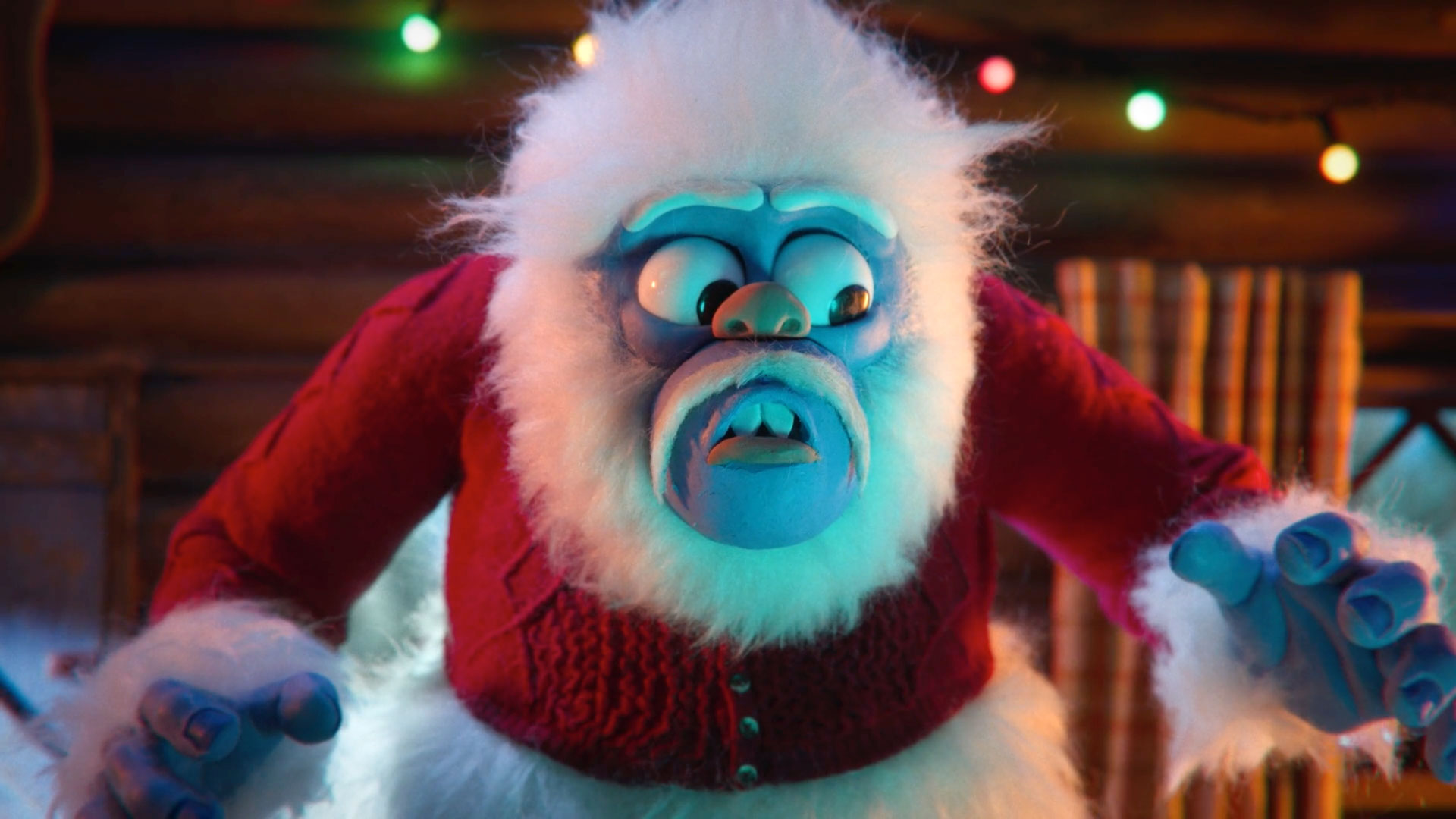
There is a catch: too much boiling looks like flicker. You have to decide which surface is allowed to move and how far. If the whole set wobbles, the viewer will notice the mistake instead of the material. The production team had the control to make the clothes active and the cabin stable. That is the transferable skill, not the particular monster or jumper.
The making-of film is as useful as the final advert because it shows the physical scale. Creative Bloq's account also reports that the directors made a reference edit with actors before animating, including a specialist performer for the monster. That is a smart way to solve timing and blocking before spending hours moving a puppet one frame at a time.
Try a twelve-frame fabric test
I have not made a miniature Levi's set, and I am not suggesting you copy its character or wardrobe. This is a small experiment for your own product, costume or model. You need a phone that can take stills, stable support, a piece of fabric and an object to drape it over.
- Put the object on a fixed table and mark its position with removable tape. Keep the light steady and the phone still. Daylight drifting through a window can turn the comparison into an exposure test, so a constant lamp is easier.
- Take twelve photographs without touching anything. Play them in a sequence at the same speed you will use for the next set. This shows your baseline and any camera or exposure wobble.
- Repeat the twelve photographs, nudging only the fabric by a few millimetres each time. Follow one direction or a gentle breathing pattern. Do not adjust the object, the background or the phone.
- Put the two sequences beside each other. Does the second one feel like fabric, or does it look as though it is buzzing? If it buzzes, make smaller changes or move it every second frame.
If you are filming clothing for a customer, get approval before turning a product image into a moving effect. An animated concept is useful for a campaign or social clip, but a sales listing also needs an accurate, ordinary view of the actual garment. Tiny sets can be charming; they should not hide what the buyer is purchasing.
My call
The film is a good example of spending effort where the camera will notice it. The wide exterior gets a varied forest. The close shots get a cabin and outfits that can survive scrutiny. The fabric gets deliberate life. None of that is an argument that every brand must spend thousands of hours on a sixty-second clip.
For a small maker, I would start with one detail that supports the thing being sold: grain in timber, the fold in paper, a stitched edge or a knit texture. Film it plainly, then try one controlled animated version. If the moving version tells the product's story better, keep it. If it only looks clever, use the plain one.
Watch Let's Get Fuzzy, then the official making-of. Before you sketch a whole miniature village, make the twelve-frame fabric comparison. It is a manageable way to find out whether that handmade movement is helping your own video.
Sources
Share this article
Know someone who would enjoy this? Pass it along.