
Sustainable & Eco Design
You Can Turn Milk Into Plastic With Vinegar
Hot milk and vinegar make a mouldable casein material. We explain what the kitchen version can make—and why it is not a miracle plastic replacement.
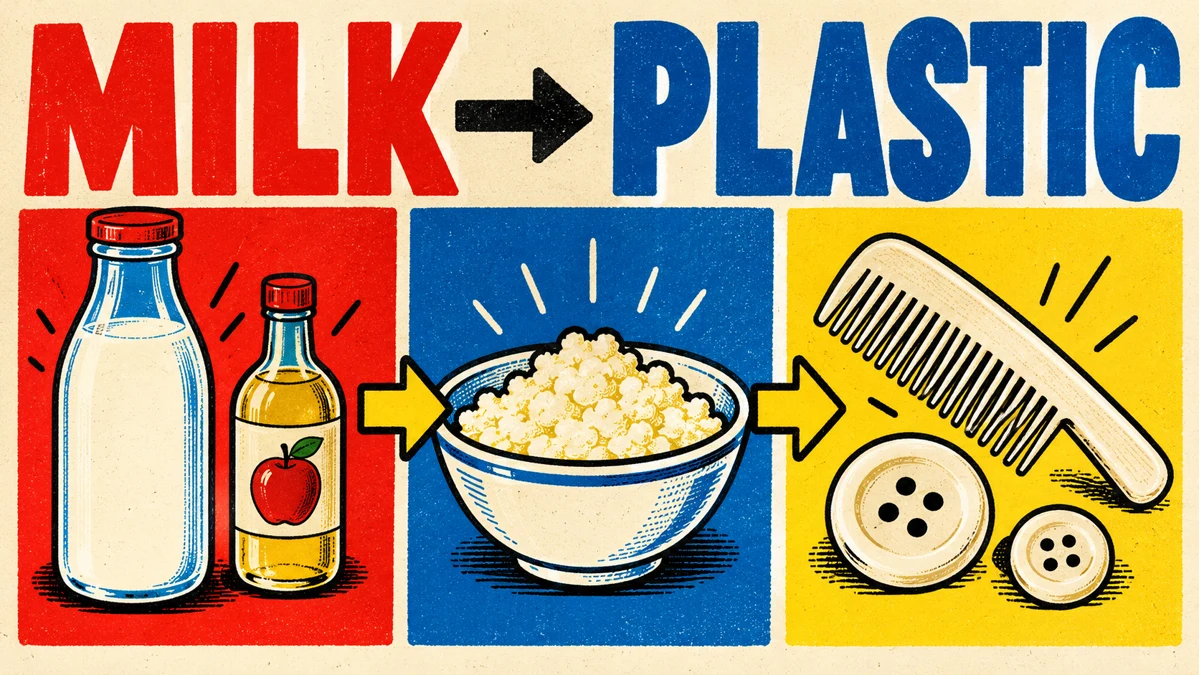
This sounds fake. It is not.
Heat milk, add vinegar and the liquid separates into curds and whey. Strain and press those curds and you are left with casein: a milk protein that can be shaped, dried and hardened into a plastic-like material.
The classroom version uses ordinary milk and vinegar. Science Buddies has a complete two-day lesson covering the reaction and moulding process. It is free to read and does not require an account.
The result is real. It is also not going to replace injection-moulded parts, no matter how enthusiastically the internet says “bioplastic”.
People actually made things from this
Casein plastics were used commercially for buttons, combs, buckles, jewellery, fountain pens and electrical fittings. The V&A holds 1930s material promoting Lactoid, a British casein-plastic brand, and historical sources describe a substantial button industry built around the stuff.
Industrial Galalith was not simply yesterday’s lunch left on a windowsill. Manufacturers used controlled recipes and hardening processes, including formaldehyde. Do not add formaldehyde to a kitchen experiment. The safe educational method produces a different, more limited material.
What the simple version is good for
Use the experiment for small decorative shapes, beads, tags, buttons or material samples. Fine detail depends on how dry the curds are, how firmly they are pressed and how evenly the piece dries.
Expect shrinkage and warping. Drying can take about two days in the classroom method. The material is not reliably waterproof, structurally rated or food safe. Do not make a spoon and announce the petrochemical era is over.
Use heat carefully, keep the process clean and discard any material that develops mould or a bad smell. It is an experiment, not a snack after it has been mixed with craft supplies.
Try this first
Make one plain batch and divide it into three identical moulds: a thin disc, a thick button and a narrow tag. Weigh and measure them before drying, then again after two days. The interesting result is not the prettiest piece. It is seeing which shape survives.