
Architecture & Interiors
Prada Built a Storefront Out of Scaffolding
Scaffolding normally means one of two things: a building is being repaired, or somebody has run out of time.
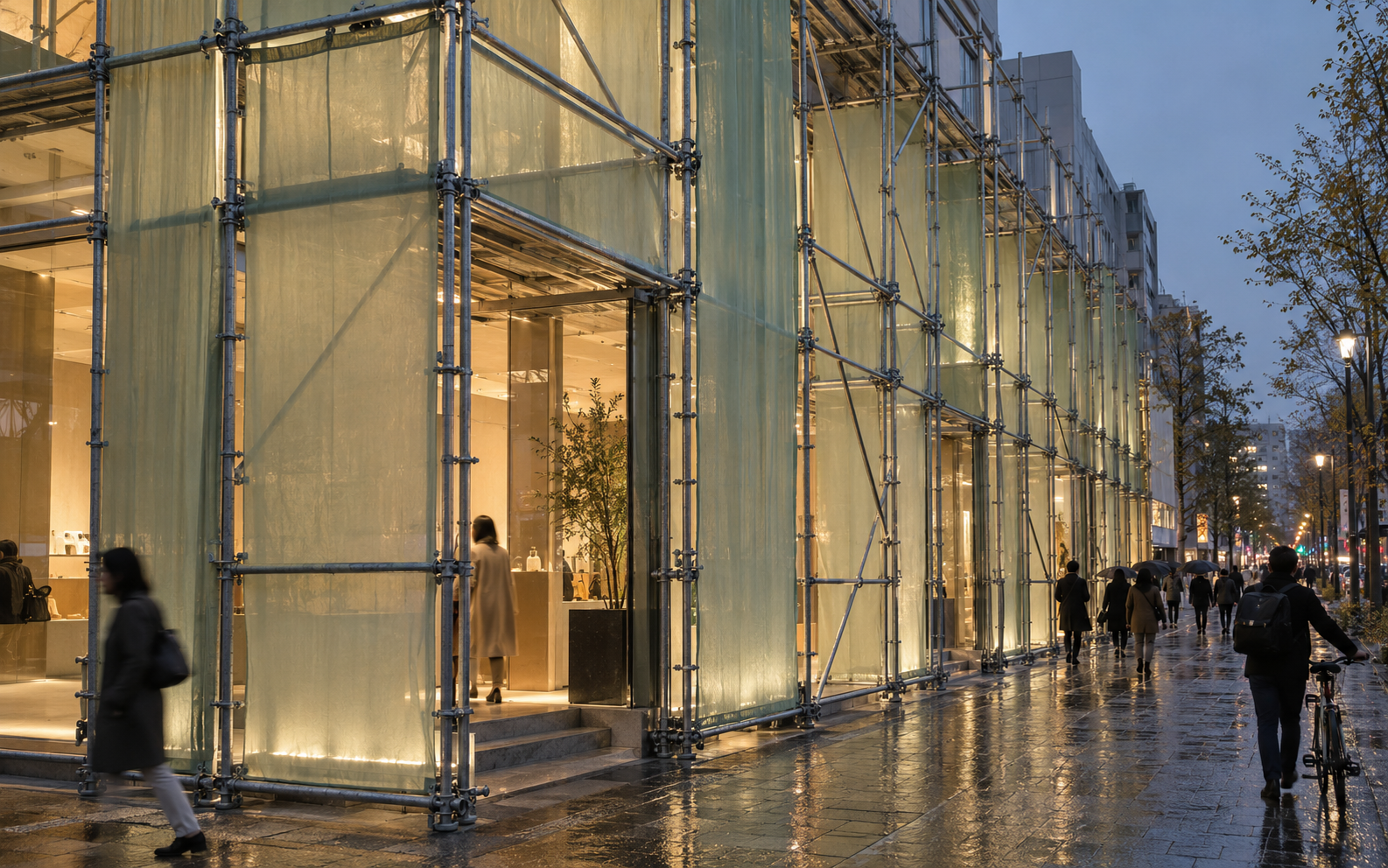
Scaffolding normally means one of two things: a building is being repaired, or somebody has run out of time.
Prada turned it into the building.
For its Fifth Avenue flagship in New York, the brand worked with 2x4 to create a permanent facade using the visual language of commercial pipe scaffolding. The structure is wrapped in a semi-transparent scrim, so it shifts between a solid architectural surface and a glowing screen as people move past it. Designboom's report shows the effect clearly.
Familiar material, completely different job
The clever part is not that the tubes are expensive. They are recognisable because they are ordinary.
We usually hide construction systems behind finished surfaces. Prada made the support system the visual identity, then used light and transparency to turn it into something more atmospheric.
That is a good reminder for makers who think the interesting part starts after the ugly practical stuff is finished. Sometimes the brackets, joins, folds, seams or fixing holes are the design.
What this means for your own work
If you are designing a display, sign, booth or product photo, do not automatically hide the structure. Photograph the clamps. Repeat the screw pattern. Let the backing board, masking tape or hanging method become part of the story.
There is a difference between unfinished and intentionally exposed. The difference is repetition and control.
Try this: photograph your next project before the final skin goes on. Look for one structural detail worth repeating instead of hiding.
Useful resource
Open the source: Designboom ↗
Start with the primary source, then follow the practical takeaway in this story.
Open resource