
Product Design
This Tiny Drone Flies With One Motor
Joshua Bird’s bedroom-built drone uses a hinged propeller, 3D-printed parts and frantic motor control instead of four separate motors.
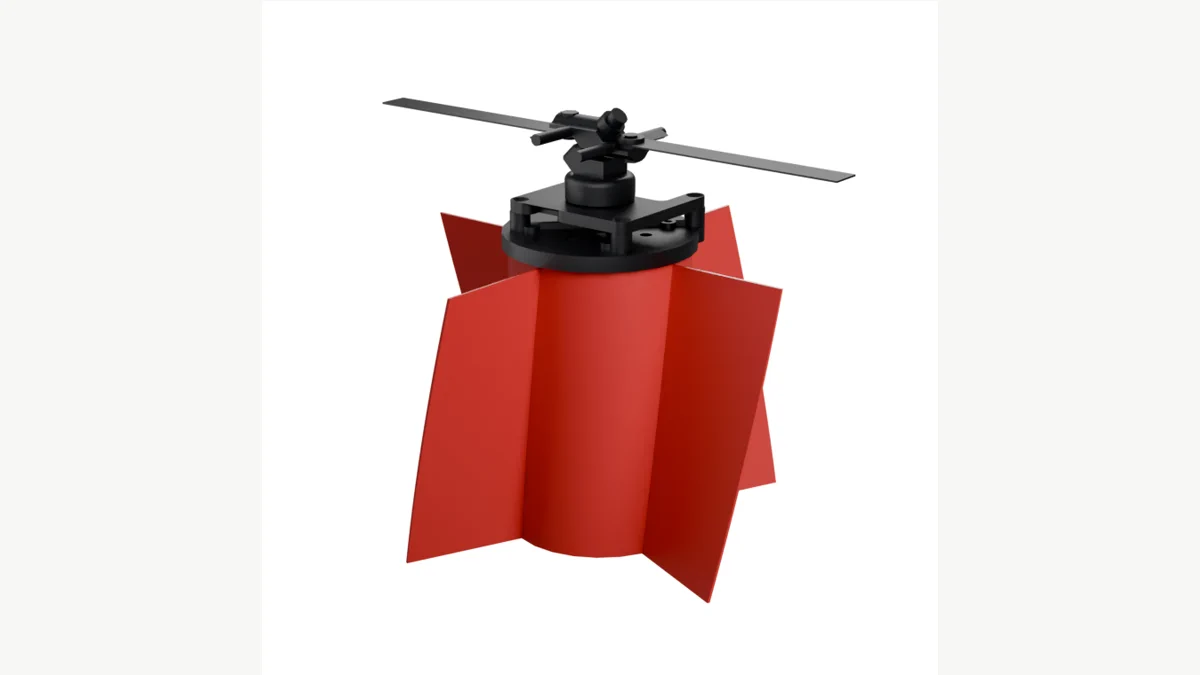
Four motors would have been far too sensible
Most small drones use four motors because four motors make control relatively straightforward. Joshua Bird decided to use one motor, no tail rotor and no servos, then test the spinning result above his bed.
It eventually flew.
The full build video is worth watching because it does not skip from clever sketch to triumphant hover. It shows the broken parts, control problems, frightening vibration and the deeply glamorous engineering process of weighting a test stand with a takeaway bag.
The propeller steers by changing speed
Each rotor blade sits on a hinge angled at 45 degrees. When the motor rapidly speeds up or slows down, the blades lag behind the hub and change pitch in opposite directions. Time those changes to the correct point in each rotation and the single rotor can influence pitch and roll.
The body uses printed fins and motor-torque changes to help with yaw. Custom flight-controller and motor-controller firmware handles the timing. This is mechanical simplicity purchased with a great deal of software complexity.
Bird has published STEP and Fusion 360 files for the body, propeller plate and two propeller versions, along with links to his ArduPilot and moteus firmware forks. The repository is public, but it does not display an obvious project-wide licence in the main page we checked. Inspect the files and ask before commercial reuse rather than assuming “on GitHub” means anything goes.
The homemade camera solved the mystery
Early flights were overwhelmed by vibration. Bird built a strobe-camera setup synchronised with the motor so the fast-moving blades appeared frozen. It revealed that the propellers were flexing. Stiffer printed blades fixed the problem.
That is the most useful part of the story. When a failure is too fast, small or chaotic to understand, build a way to see it before building version 47 of the same mistake.
The drone is still tied to one room because it uses a fixed infrared beacon for heading. It is a successful prototype, not a finished consumer aircraft.
Try this first
Do not copy the flight test over your own pillow. Open the public CAD files and study how the 45-degree hinge converts motor acceleration into blade pitch. The lesson is visible before anything leaves the desk.