Sustainable & Eco Design
The Strange Materials Trying to Replace Plastic
“Eco-friendly material” is not a material. It is a phrase people put on a moodboard when they have not checked what the thing is made from.
“Eco-friendly material” is not a material. It is a phrase people put on a moodboard when they have not checked what the thing is made from.
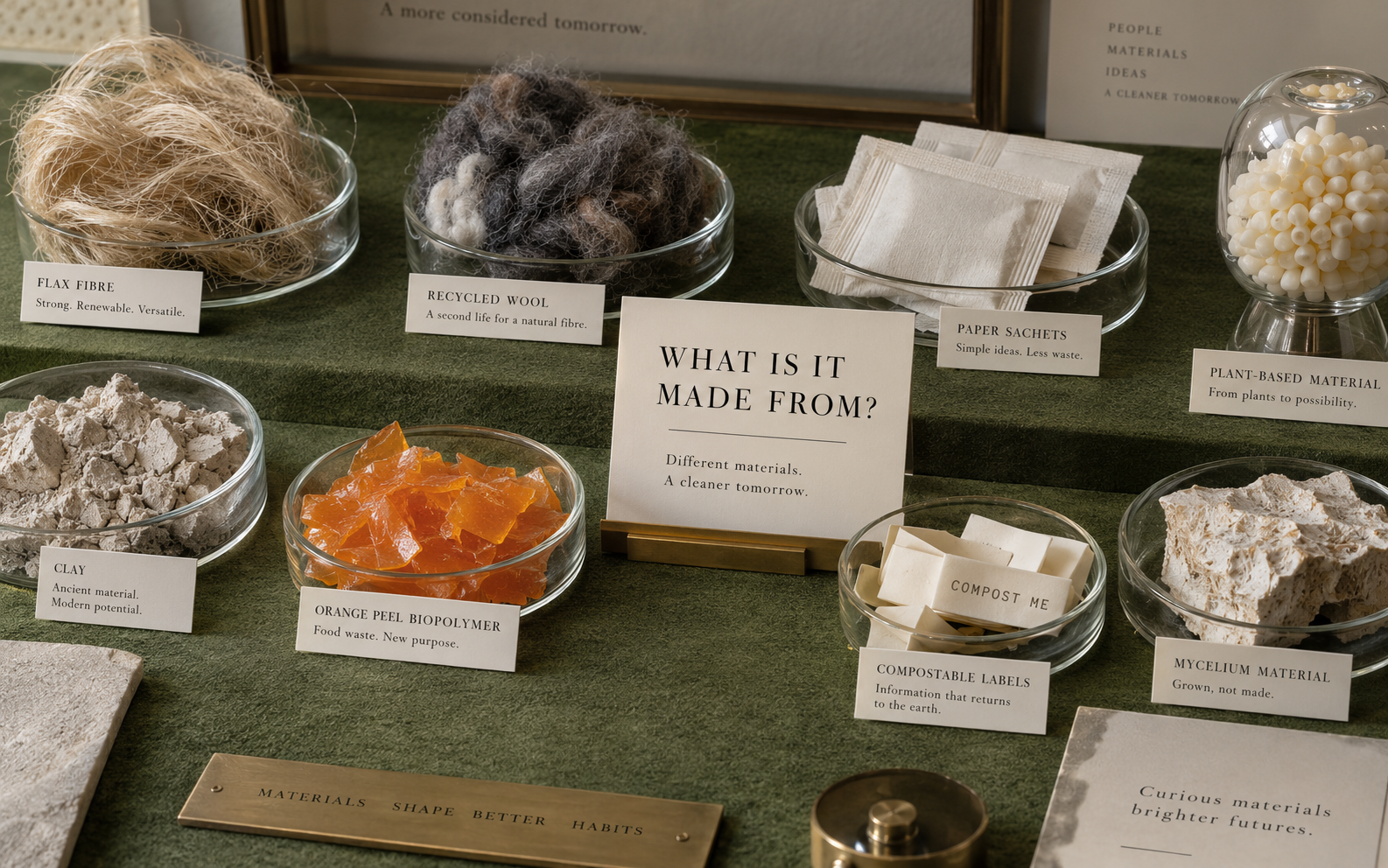
The more interesting work is happening in the details: recycled wool and flax, plant-based fashion materials, compostable labels and fossil-free paper packaging. Alder BioInsights' October review tracks several of these developments across packaging, textiles and product design.
The material has to survive real life
Can it handle moisture? Can it be printed? Does the adhesive still work? What happens when two different materials are glued together? Can the customer separate them at the end?
These questions are less glamorous than a green leaf icon, but they are where the design either succeeds or falls apart.
A better way to talk about sustainable materials
Name the material. Explain the trade-off. Say what it replaces and what it cannot do yet.
If you are choosing packaging for a small product, test the whole system—not just the box. Include the label, tape, insert, ink and disposal instructions. A recyclable carton with a permanently glued plastic window is not the whole story.
Try this: write down every component in one product package and give each one a material, job and end-of-life note.
Useful resource
Open the source: Alder BioInsights ↗
Start with the primary source, then follow the practical takeaway in this story.
Open resource