Motion & 3D
People Are Comparing Toy Story With the Original Film Stock
The strange thing about old animation is that the roughness is often part of the charm.
The strange thing about old animation is that the roughness is often part of the charm.
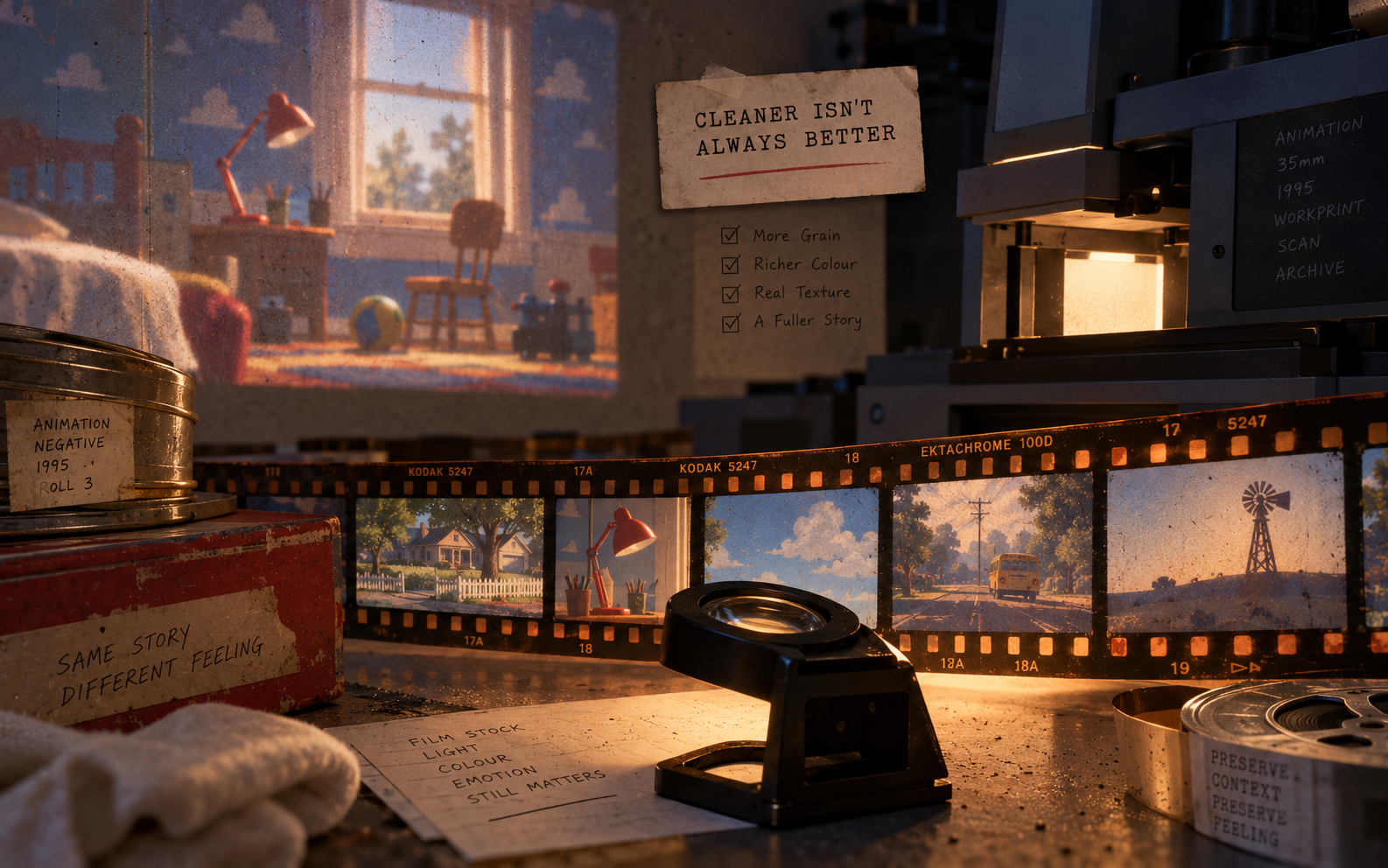
When people compare digital versions of Toy Story with scans of the original 35mm film, they notice things that the clean modern image tends to hide: grain, tiny colour changes, softness and the physical texture of the film itself. The comparison has been circulating because the two versions feel like different objects, even though the frames are the same.
Clean is not always better
Designers spend a lot of time removing dust, noise, uneven edges and accidental texture. Sometimes that is exactly right. Sometimes the cleanup removes the evidence that a human or a physical process was involved.
The same thing happens with vector files. A hand-drawn shape gets straightened until it looks like every other shape on the internet. A rough print becomes a perfect digital fill. The result is tidy, but not necessarily interesting.
Put a little evidence back in
You do not need to make every project look old. Just decide what kind of evidence belongs in it.
Keep a little grain in a poster. Let a scanned pencil line wobble. Photograph the edge of the material instead of cropping it away. Use a texture that came from the actual making process rather than a random “vintage” overlay.
Try this: duplicate one clean design and deliberately put back one physical clue—grain, ink spread, a hand mark or a slightly uneven edge.
Useful resource
Open the source: Creative Bloq 2026 news archive ↗
Start with the primary source, then follow the practical takeaway in this story.
Open resource