Sign making
Old neon signs are being restored like loud glowing pieces of design history
A restored sign is not just nostalgia. It is typography, glass work, electricity, colour and local memory all bolted to a wall.
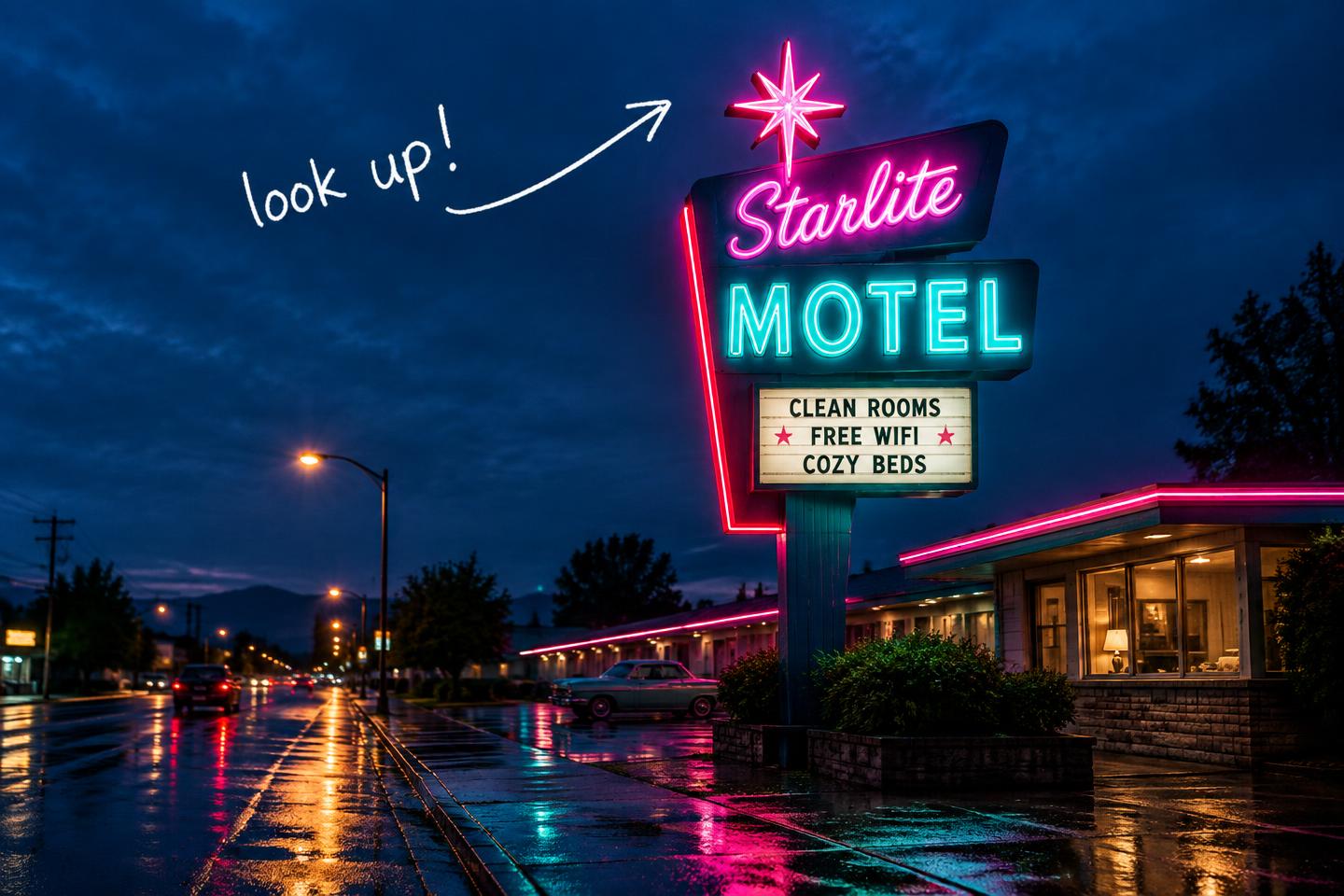
This stuff still hits
Old neon signs have something most modern signs do not: guts. Bent glass, buzzing transformers, hand-shaped letters, odd colours and the confidence to be seen from the road.
That is why restoration matters. You are not just saving an old business logo. You are saving the way a street used to talk. A good sign was advertising, architecture and public art all at once.
Why makers should care
Neon is basically typography plus fabrication. The letter has to look right, but it also has to be physically possible to bend, mount, wire and repair. That is a better design lesson than another flat logo mood board.
The Neon Museum says its collection includes restored signs installed as public art around Las Vegas. The city has also documented restored historic neon being added along Las Vegas Boulevard. Real design, back in public view. The important bit: neon involves fragile glass and high voltage, so restoration belongs with trained sign makers and electricians—not a weekend wiring experiment.
Steal the idea, not the sign
For laser and SVG people, the useful idea is not copying famous Vegas signs. It is studying why they work: thick readable forms, strong silhouettes, limited colours, and letters that feel like objects.
Look at how much character comes from spacing, outline thickness and the shape around the words. That is the bit you can use in your own signs without ripping off someone else’s landmark.
My take: modern signage often gets too clean and forgettable. Neon restoration is a reminder that a sign can have a personality before it says a single word.
Useful resource
See restored neon signs ↗
Open the Neon Museum overview and public-art collection details.
Open resource